Holding the guitar body while performing some operation on the sides, like sanding or scraping the binding, can be a bit tricky. My standard approach has been to put the waist against a towel draped over the edge of my workbench, and wedging the body in place between my thigh and belly. This has been a reasonably effective way to secure the body, but required a bit of practice before it didn’t feel like the guitar body might shoot out like a watermelon seed. It became unwieldy when I started using a rolling-pin sander, since that requires a bit of balance and finesse itself.
In looking around at how other builders addressed the need to secure the body, I came across the “troji”, a clamping stand that’s been attributed to luthier Jean Larrivee (among others). It’s basically a floor-standing wooden vise with padded jaws in the profile of a guitar. While it looks like it would be relatively easy to make (and can even be purchased pre-made from lutherie suppliers), it unfortunately takes up floor space, and that’s currently at a premium in my small and crowded shop.
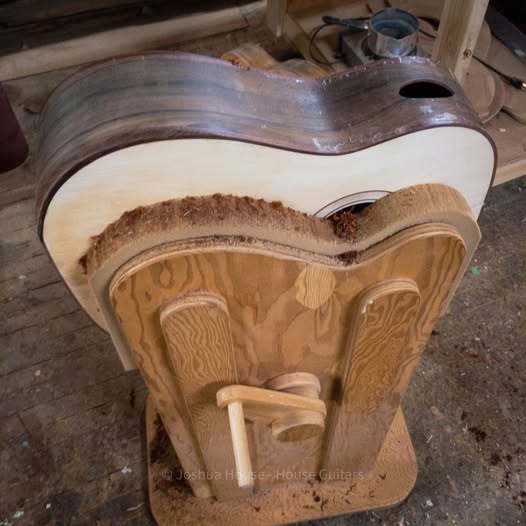
Doing some further googling, I came across a bench-mounted pipe-clamp-based version that looked interesting. This used threaded flanges screwed to the edge of the workbench top, with pipe clamps threaded in so the pipes stuck out horizontally. When not in use, the pipe clamps can be unscrewed. Though handy, removable, and easy to make, a couple of features looked like they needed improvement. I didn’t like having the flanges permanently attached to the edge of the workbench, and threading the pipe clamps into the flanges seemed likely to leave the pipe clamp screw heads at a random angle when the pipes were tightly screwed in. So I set out to improve on the design, and came up with the clamping jig shown.
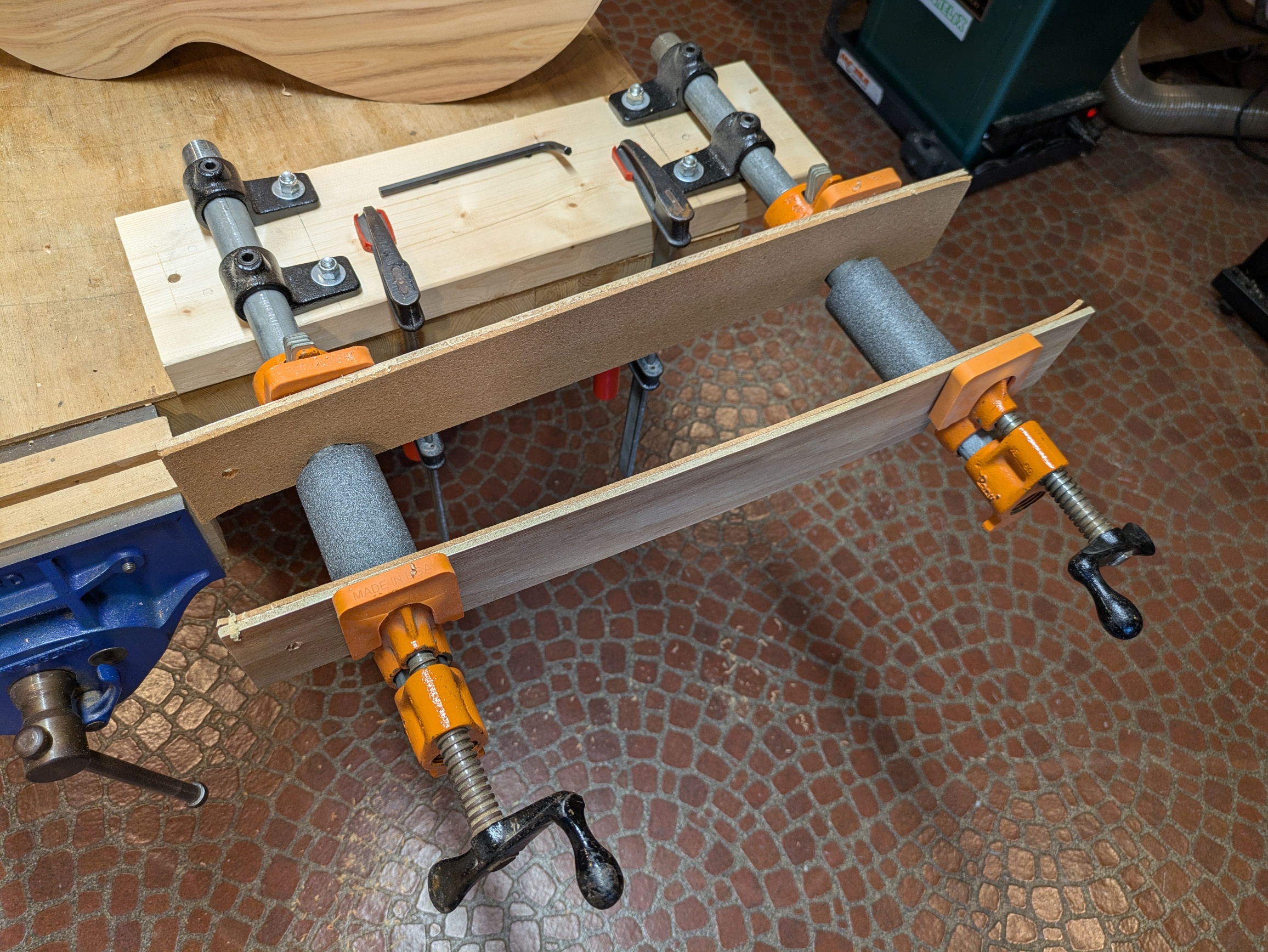
The base is just a length of 2 x 6 with four pipe brackets attached. The brackets are available at any local hardware store, intended for those who want to use pipe as a railing. With the base clamped to the workbench, the pipe clamps can be slid into the brackets and held in place with the set screws on the brackets. I attached the brackets somewhat loosely using lock nuts so that they could align easily as the pipes are inserted. Two cork-faced plywood clamping cauls notched to fit over the pipes protect the guitar body from the clamp faces, and a couple of pieces of foam pipe insulation pad the pipes. I used a 14.5” center-to-center spacing between the pipes for the clamp. This allows the body to sit on the pipes (on the foam pipe insulation) for working on the sides.
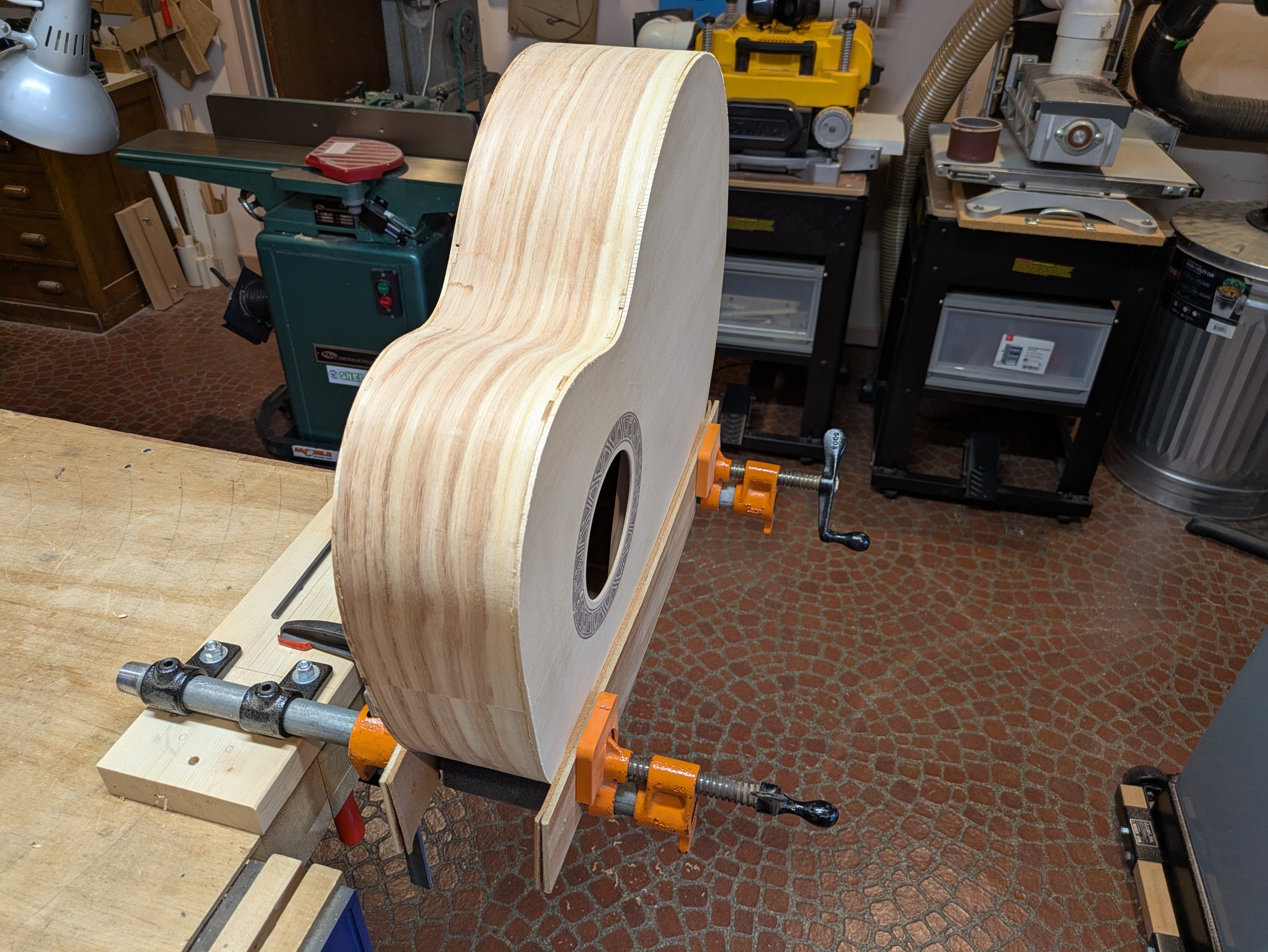
One very nice feature is the independence of the two clamps, which is helpful when clamping a body on its side due to the different thicknesses at the upper and lower bouts.
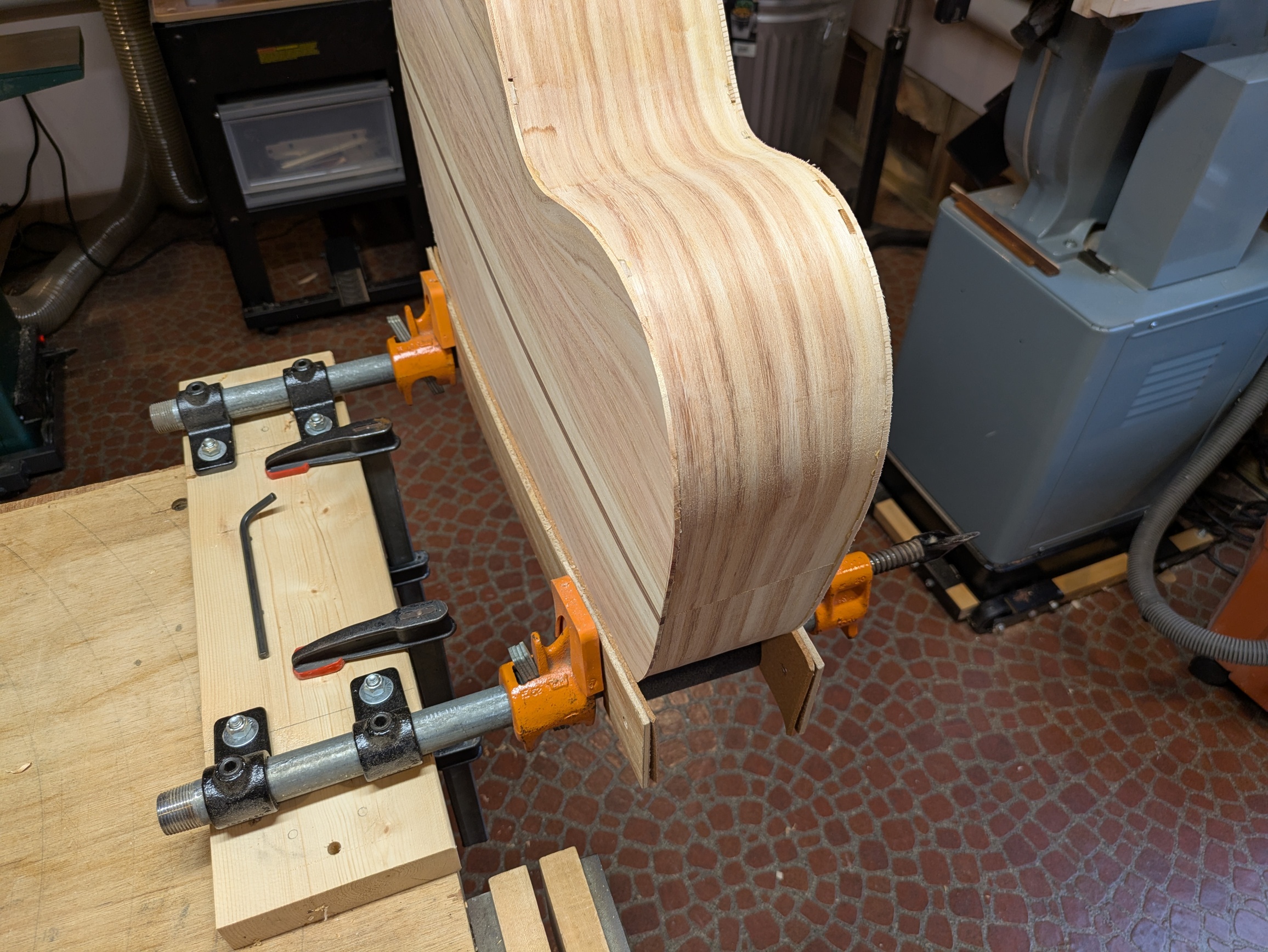
This spacing of the pipes also allows the upper bout to fit between the pipes for working on the neck joint. For this, the pipes can be rotated 90 degrees so the jaws face inward – the set screws allow the orientation of the clamp heads to be adjusted as needed, in the standard vertical orientation or horizontally to clamp at the body edges.
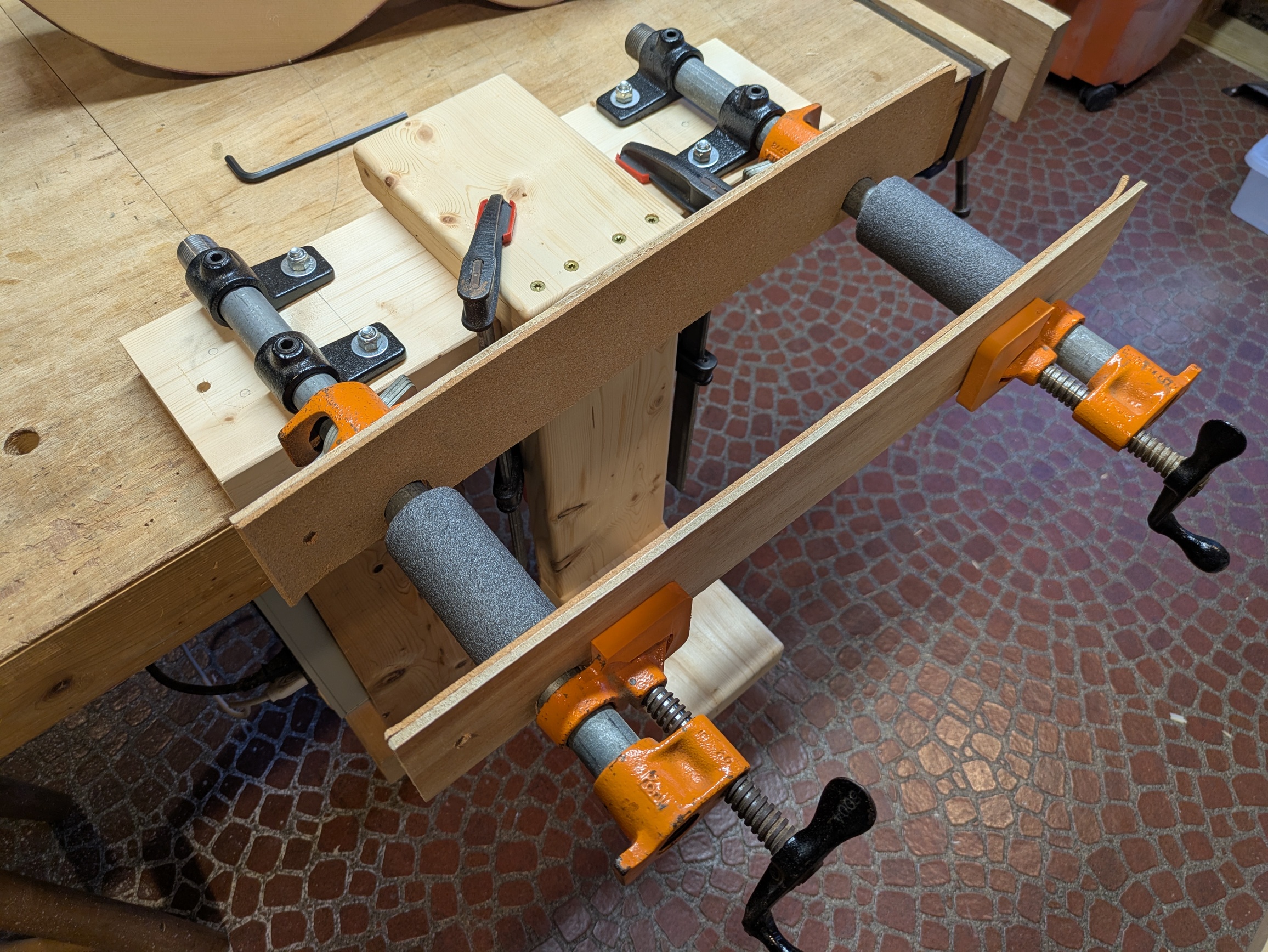
To provide positive support for the body when working on the neck joint, I built a z-shaped shelf bracket to hold the bottom of the guitar – I wouldn’t trust the clamping alone to hold the guitar without something underneath it. The bracket is clamped to the troji and the guitar’s lower bout rests on the bracket.
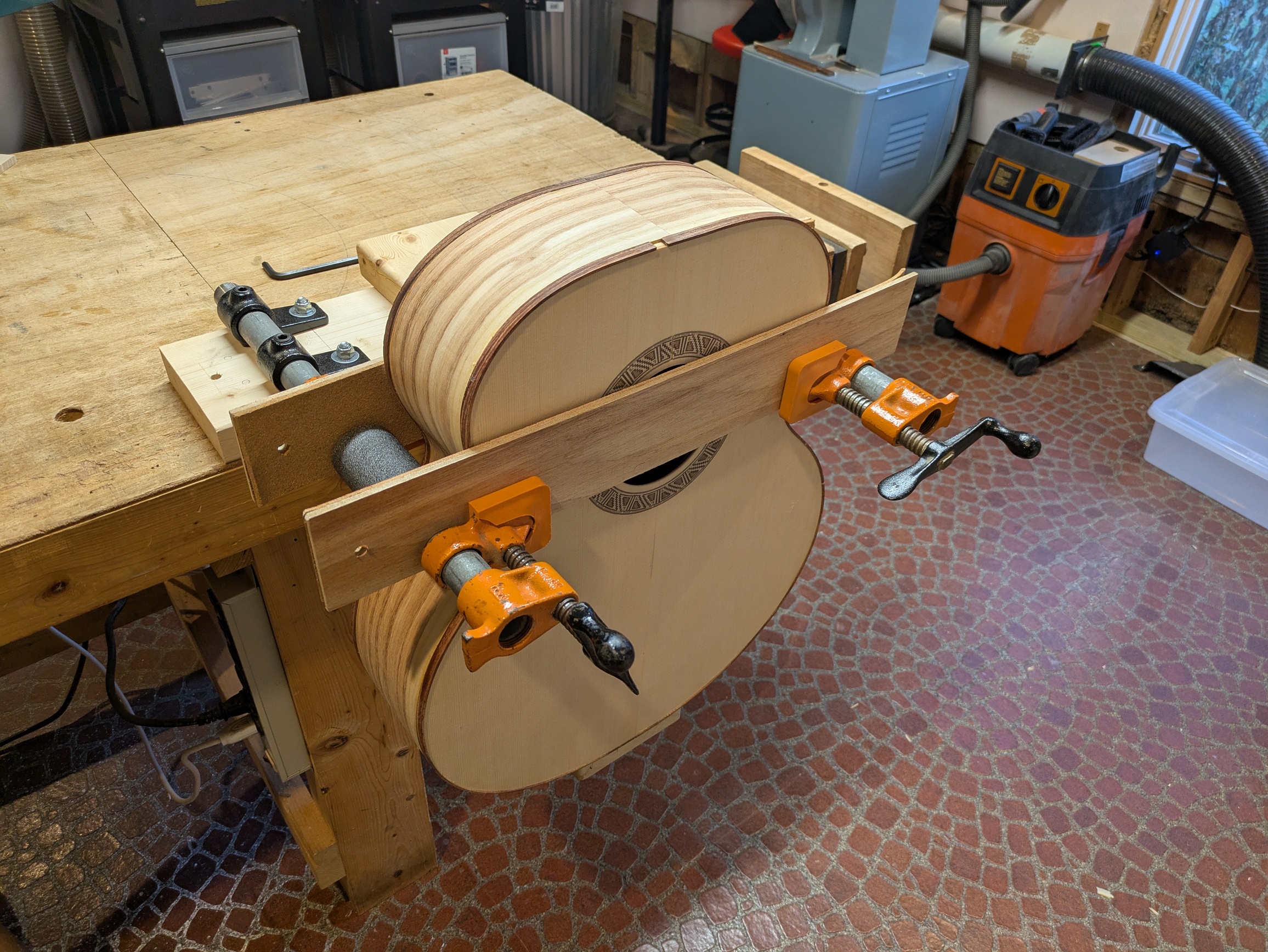
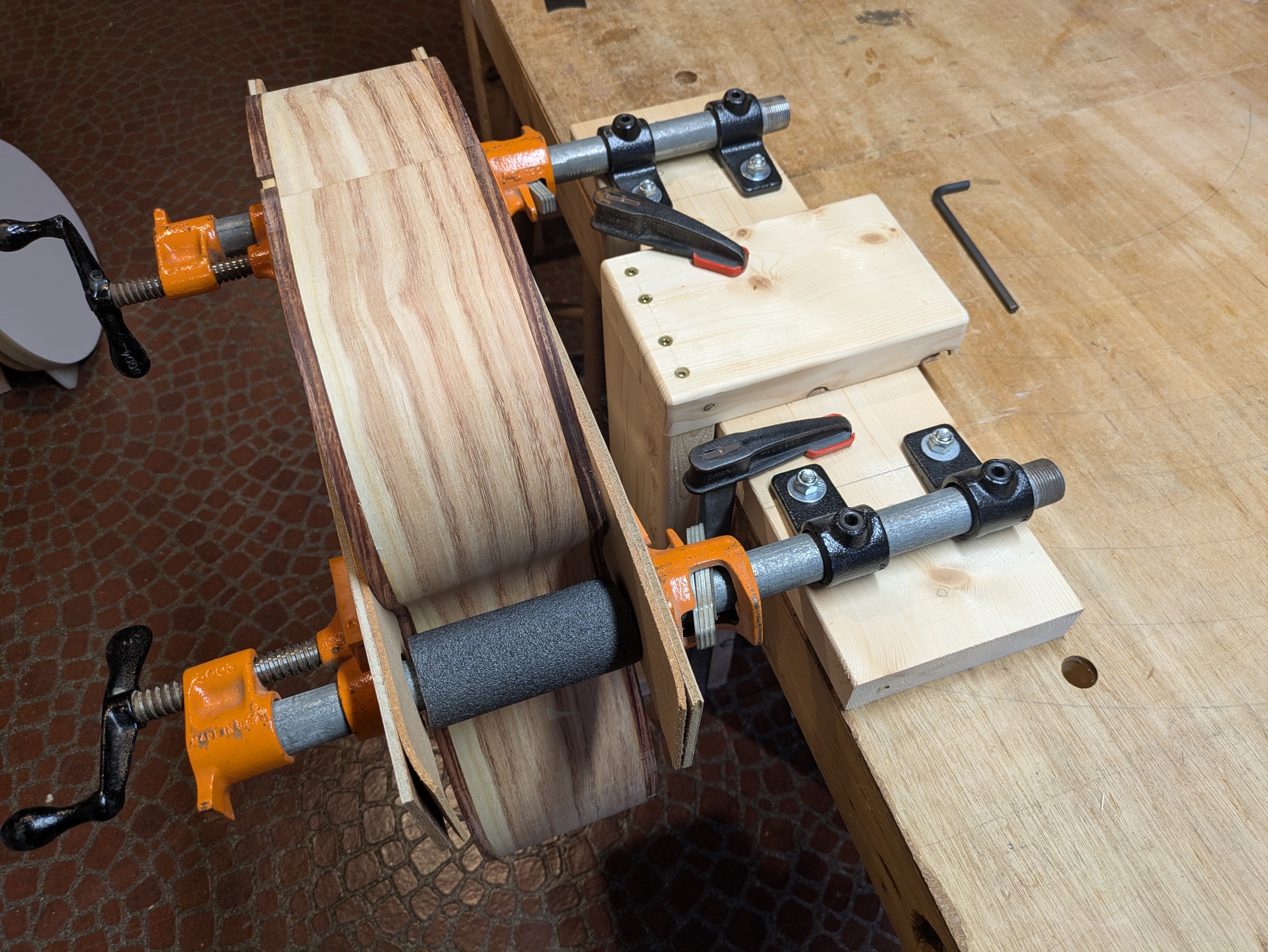
When not in use, the troji base and clamping cauls hang on the wall of my workshop, and the pipe clamps reclaim their place on my clamp rack. One thing to be quite aware of is that pipe clamps can definitely crush a guitar body, so you’ll want to be judicious with the clamping pressure. But this can also lead to the body loosening in the clamps as it is worked, so it may need occasional re-tightening.
This clamping system has been very convenient – it holds the body securely and frees up both hands (and legs and belly) so I can concentrate on the operation at hand. I still use the “belly balance” approach on occasion, for quick operations, but for anything more involved the troji is the way to go.